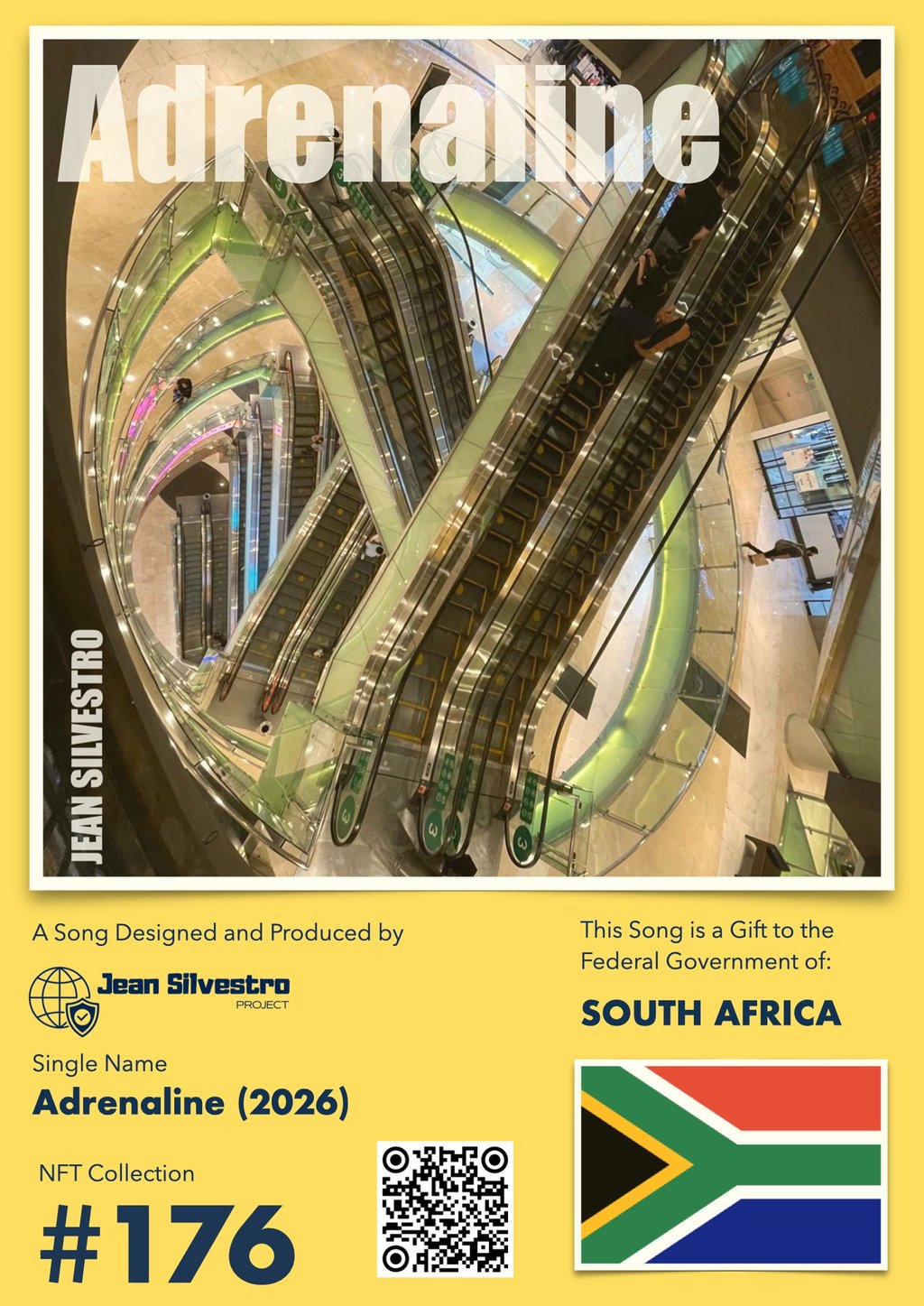
#176 Adrenaline (2026)
Lyrics
It's like a car race, Adrenaline
High speed no brakes, Yes I feel alive
Too many drinks, too many women
Too many reasons to cry later on
Bright lights, diamonds
Expensive eyes
Loud sound, no talks
Welcome to the night
Envy and vanity
The seven sins
Lovely faces
And closed hearts
Too many drinks, too many women
Too many reasons to cry later on
How many tears, how much money
Should I pay to find a reason for this
Your eyes are like mirrors
And I can look at now
You are getting crazy to understand me
My lies are like fire
Burning my reasons
I’m just paying my insanity price
Restless bodies, dealers, lovers
Darkness Im trying to find my way
Ladies on fire, sex take me higher
I will meet myself in the hell someday
Your eyes are like mirrors
And I can look at now
You are getting crazy to understand me
My lies are like fire
Burning my reasons
I’m just paying my insanity price
Your eyes are like mirrors
And I can look at now
You are getting crazy to understand me
My lies are like fire
Burning my reasons
And carry on my heart
Carry on my mind
Carry on dreams, my days and Life
I'm fucked up
The Secret and Inspiration
Cape Town has a sky that seems to lie. Intense blue over the dramatic silhouette of Table Mountain, a shimmering sea where two oceans violently meet at the Cape of Good Hope, tourists photographing seals at the V&A Waterfront while, a few kilometers away, townships like Khayelitsha breathe inequality inherited from apartheid. It is in this contrast that Henrique lands for the first time. He is thirty years old, born and raised in São Paulo, liked heavy metal, played guitar in his spare time, and has always been a peaceful guy. He never imagined he would set foot on that soil as part of something that smelled of gunpowder and dirty money.
The invitation came from Pieter van Rensburg, an elegant South African with a cold gaze, who had contacts in the port and vineyards of Stellenbosch. It wasn't about violence—not at first. It was about the "alternative market." Diamonds that bypassed bureaucracy. Quick transactions. Obscene margins. Henrique would be the international intermediary, someone trustworthy, discreet, foreign enough not to raise local suspicions. He hesitated for one night. The next day, he accepted. The promise was simple: a few years of risk for a lifetime of comfort.
At first, it felt like a Formula 1 race. Discreet meetings in offices overlooking Camps Bay, imported cars gliding down Chapman’s Peak Drive, suitcases never opened in front of him. He felt his heart race as if he were inside a high-revving engine. The adrenaline was clean, almost innocent. He still believed he was just evading taxes. “High speed, no brakes,” Pieter would say, laughing on a brightly lit balcony.
But the truth soon emerged in Africa. It came one dawn at the port, amidst containers and men too heavily armed for simple traders. Henrique saw stones wrapped in dirty rags, heard accents from conflict-ridden regions of the continent. He discovered that some of those diamonds had passed through war-stained hands. He didn't ask. Not at that moment. The money went into his offshore account the following week. He chose not to brake.
The following years were a parade of excess. Bright lights, diamonds, expensive eyes. Rented mansions in Clifton, parties that lasted until dawn with international DJs, women of almost unreal beauty, bodies sculpted by luxury. Henrique began to drink too much. Then, something beyond alcohol. Sex, power, and money became the tripod of his existence. He cut ties with São Paulo. He stopped playing guitar. The band he had with friends became a distant memory. His old life was too slow for someone who now lived in constant combustion.
Cape Town showed him its two faces. By day, the imposing Table Mountain, tourists strolling along Long Street, artisan markets in Greenmarket Square. At night, alleys where deals were sealed with glances and weapons under jackets. Henrique moved between worlds as if he belonged to all of them. He was no longer the quiet thirty-year-old. He was an international operator, surrounded by envy and ulterior motives, always observed, always desired.
The decade passed like a flash. He accumulated properties, cars, rare watches. He bought silence, he bought pleasure, he bought company. But he didn't buy rest. He slept little. He dreamed of chases. His face in the mirror began to look strange. Subtle wrinkles, tired eyes. "Too many drinks, too many women… too many reasons to cry later on." The phrase echoed without him knowing where it came from.
The near-death experience happened on a coastal road, on a night with strong winds coming from the Atlantic. A delayed shipment, high tension, suspicious partners. A car cut him off. Shots fired. Shattered glass. Henrique instinctively accelerated. The vehicle spun on the wet road. For seconds, he saw the dark sea below the cliff. He survived by a miracle—or irony. He later discovered he had been betrayed by someone on the inside. In the game of power, trust is a disposable commodity.
He didn't denounce. He didn't confront. He simply eliminated the traitor with bureaucratic coldness. And he realized something terrifying: he felt nothing. No guilt, no shock. Only calculation. It was in this emptiness that the adrenaline lost its flavor. The race continued, but the engine no longer vibrated. He was alive, absurdly rich—and utterly hollow.
One morning, he climbed the Table Mountain trail alone. The wind cut his face. From up there, he saw the brutal contrast of the city: luxury and poverty sharing the same horizon. He thought of the exploited workers in the mines, of the invisible conflicts that fueled his fortune. He thought of the guitar forgotten in some old apartment in São Paulo. He thought of the young man he was before discovering that money buys almost everything—except meaning.
He tried to fill the void with improvised spirituality, quick retreats, anonymous donations, promises to slow down. But the machine he helped build didn't allow for easy exits. His contacts demanded presence. The black market didn't accepts elegant retirements. Henrique began to wonder how much he should pay to find a reason for all of this. How many tears, how much money?
In the end, he survived. Rich. Respected in the underworld. Feared by some. But when he looks in the mirror of his apartment overlooking the ocean, he doesn't recognize the man reflected. The adrenaline that once made him feel alive is now just background noise. He carries in his heart, mind, and days a weight that money cannot dissolve. Cape Town remains beautiful under the African sun. The sea continues to crash against the rocks with eternal violence. And Henrique remains there—not dead, but unrecognizable—paying the price of his own insanity, realizing too late that the race never had a finish line.
South Africa - Performance
Each country profile presents the most recent data available on a range of indicators relating to the well-being of women and children. Each country profile page is composed of data from multiple sources, depending on the indicator domain. For example, child mortality rates come from the most recent data produced by the UNICEF-led Inter-agency Group for Child Mortality Estimation (IGME).
SDG indicators related to children
The 2030 Agenda includes 17 Global Goals addressing the social, economic and environmental dimensions of sustainable development. Attached to the Goals are 169 concrete targets measured by 232 specific indicators.
To map and monitor how ambitious and realistic countries’ targets are, UNICEF has created quantifiable country-level benchmarks for child-related indicators for which data are available to measure and monitor child rights on a common scale.
Below is a snapshot of the country’s performance against the 45 child-related SDG indicators, grouping results into five areas of child well-being to provide an overall assessment of how children are doing. Countries are assessed using global and national targets. The analysis provides valuable insights into both historical progress—recognizing the results delivered by countries in the recent past—and how much additional effort may be needed to achieve the child-related SDG targets. This approach provides a framework for assessing ambition as well as the scale of action needed to achieve it.
Jean Silvestro Project • 2025 • All Rights Reserved
The project is currently in the institutional consolidation phase, with legal and structural developments underway.