
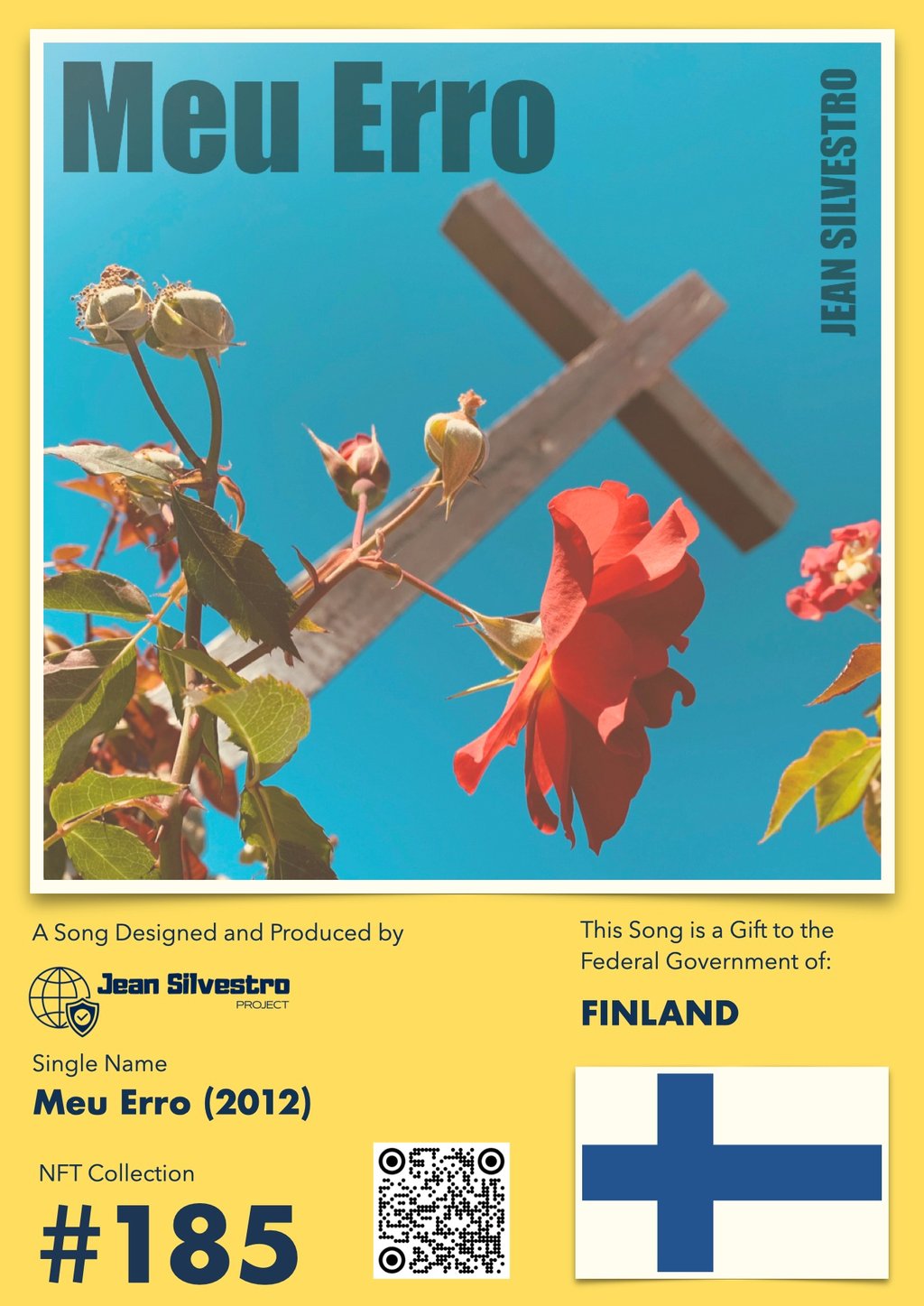
#185 Meu Erro (2012)
Lyrics
Em teu rosto eu iria beijar
Te entregando assim
Hoje eu choro e me arrependo demais irmão
Não posso viver assim
Te olhar, sentir a dor e mostrar
Um sacrifício assim
Oh, oh, oh
Sangrar sobre os meus pecados
Perdoar o erro que eu cometi
Transformar, Transformar, Transformar, Transformar
Tua lágrima e um grito de dor
Mostram para mim
Tua mensagem foi cravada no coração
Não quero viver assim
Te olhar, sentir a dor e mostrar
Um sacrifício assim
Oh, oh, oh
Sangrar sobre os meus pecados
Perdoar meu erro, uhhhh
Te olhar, sentir a dor
De um sacrifício assim
De um sacrifício assim
Sangrar sobre os meus pecados
Perdoar meu erro, Oh, oh
Te olhar
Oh, oh, oh, oh, oh
Um sacrifício assim, Yeah
Sangrar sobre os meus pecados
Perdoar meu erro, uhhhh
The Secret and Inspiration
Judas always believed he could anticipate Jesus' moves. From the beginning, he saw in him not only the spiritual master, but the leader who could finally confront Rome, establish order, and break with the political humiliation that corroded the people. He wasn't the most impulsive of the disciples, nor the most devout—he was the most pragmatic. He managed the money, calculated risks, and observed the crowds.
When he realized that Jesus spoke more and more of surrender, of love for enemies, and of a kingdom that was not of this world, something began to break within him. Part frustration, part ambition, part fear of having staked his own life on a promise that wouldn't be fulfilled as he had imagined. The thirty pieces of silver were not just a price; they were a justification.
On the night he decided to seek them out, the priests didn't need to convince him much. They simply put into words what was already germinating in his mind: if Jesus were pressured, if he were confronted by the authorities, perhaps he would finally react. Perhaps he would show power. Perhaps he would reveal political strength. Judas didn't believe he was ending a story—he believed he was accelerating it. The kiss would be a sign, not a sentence. An intimate gesture transformed into a code. A calculated risk. He had always been good at calculations.
But when his lips touched Jesus' face in the garden, something failed him. The look he received was not surprise, nor anger, nor fear. It was recognition. Human. Profoundly human. "Friend," Jesus would have said in a low voice, without theatricality. There was no accusation. Only a sadness that didn't ask for explanation. Judas felt, at that moment, that the plan no longer belonged to him. That it had never belonged to him.
The arrest was swift. The violence, even swifter. Judas hadn't foreseen the brutality. He hadn't foreseen the mockery, the punches, the crowd hungry for condemnation. When he heard the first accounts of the assaults, he tried to convince himself that there was still time—that Jesus would speak, that he would do something, that the heavens would open as so many times before. But nothing opened. Only silence. And in that silence, his conscience began to bleed.
He ran back to the temple with the coins in his hands, the metal weighing like lead. He threw them on the ground, demanding that they undo the agreement. The priests looked at him with bureaucratic contempt. “That’s your problem.” It was at that moment that Judas understood that he had been used—but worse than that, that he had allowed himself to be used. Guilt ceased to be circumstantial and became his identity. He was no longer the pragmatic disciple. He was the traitor.
He tried to approach one last time when Jesus was led to trial. He couldn't get through the crowd. He only saw the wounded body from afar, the blood mixed with dust, the exhaustion in his steps. And when their eyes almost met again, Judas felt something unbearable: there was no hatred there. There was no rejection. There was something close to compassion. That absence of condemnation was more cruel than any curse.
When the news of the crucifixion spread, Judas didn't run to hang himself. He ran into himself. He expected to feel relief. He expected to feel justification. He felt nothing but an obsessive repetition of the same scene: the kiss, the look, the word "friend." He walked away from the city in the following days, not as an official fugitive, but as a moral exile. People recognized him. Some spat. Others simply walked away. He accepted it. No external judgment surpassed the internal tribunal that condemned him every night.
Years passed, but time did not soften the episode—it only deepened it. Judas grew old carrying the memory like an open wound that refused to heal. He heard rumors of resurrection, stories of apparitions, accounts of forgiveness offered even to those who had denied him three times. He thought of seeking out the other disciples. He thought of kneeling. But something inside him whispered that his mistake was different, irreparable. He had not doubted out of fear; he had betrayed out of calculation.
And so he lived. Not as a martyr, nor as a legendary villain, but as a man who could not forgive himself. Every dawn, he remembered that he had kissed the face of the one who had called him friend. Every night, he wondered if there had been room for redemption—and if the redemption offered was greater than his own capacity to accept it.
His punishment was not death. It was continuing to breathe, knowing that the sacrifice he had witnessed also bled for his sins. And perhaps the deepest mistake was not the betrayal, but the silent refusal to believe that even he could be transformed.
Finland - Performance
Each country profile presents the most recent data available on a range of indicators relating to the well-being of women and children. Each country profile page is composed of data from multiple sources, depending on the indicator domain. For example, child mortality rates come from the most recent data produced by the UNICEF-led Inter-agency Group for Child Mortality Estimation (IGME).
SDG indicators related to children
The 2030 Agenda includes 17 Global Goals addressing the social, economic and environmental dimensions of sustainable development. Attached to the Goals are 169 concrete targets measured by 232 specific indicators.
To map and monitor how ambitious and realistic countries’ targets are, UNICEF has created quantifiable country-level benchmarks for child-related indicators for which data are available to measure and monitor child rights on a common scale.
Below is a snapshot of the country’s performance against the 45 child-related SDG indicators, grouping results into five areas of child well-being to provide an overall assessment of how children are doing. Countries are assessed using global and national targets. The analysis provides valuable insights into both historical progress—recognizing the results delivered by countries in the recent past—and how much additional effort may be needed to achieve the child-related SDG targets. This approach provides a framework for assessing ambition as well as the scale of action needed to achieve it.
Jean Silvestro Project • 2025 • All Rights Reserved
The project is currently in the institutional consolidation phase, with legal and structural developments underway.